Industrial Insights Podcast
From Steel Coil to Warehouse Rack with Freeman Welch
Episode summary
Freeman Welch once walked me through the Nucor Warehouse Systems plant in Vernon. On this episode, he takes us back to the line where a steel coil is slit, rolled, punched, and painted into warehouse rack.
For a 3PL signing a lease, Freeman asks a question that is easy to miss: will the rack still work when the next customer brings in a different product? We talk about pallet loads, fire protection, what a local dealer knows about permitting, and why an operator with a customer arriving in three months might install conventional rack before investing in automation.
We also get into the part of a conveyor project that can hold up the opening after the equipment is installed: making the hardware work with the warehouse management system. We close with a Southern California and Arizona location decision, and why the ability to find a load for the return trip can change the economics of a trucking lane.
Inside the Vernon plant
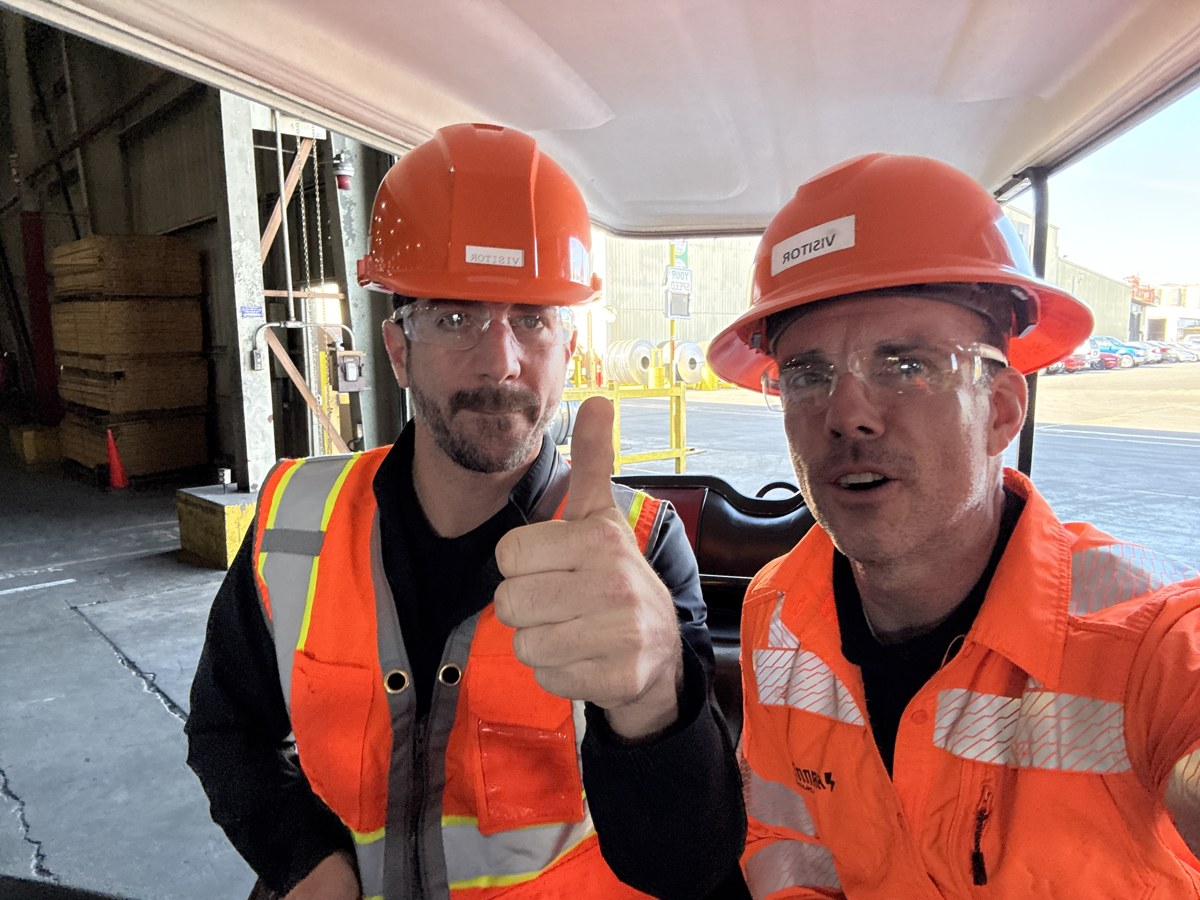
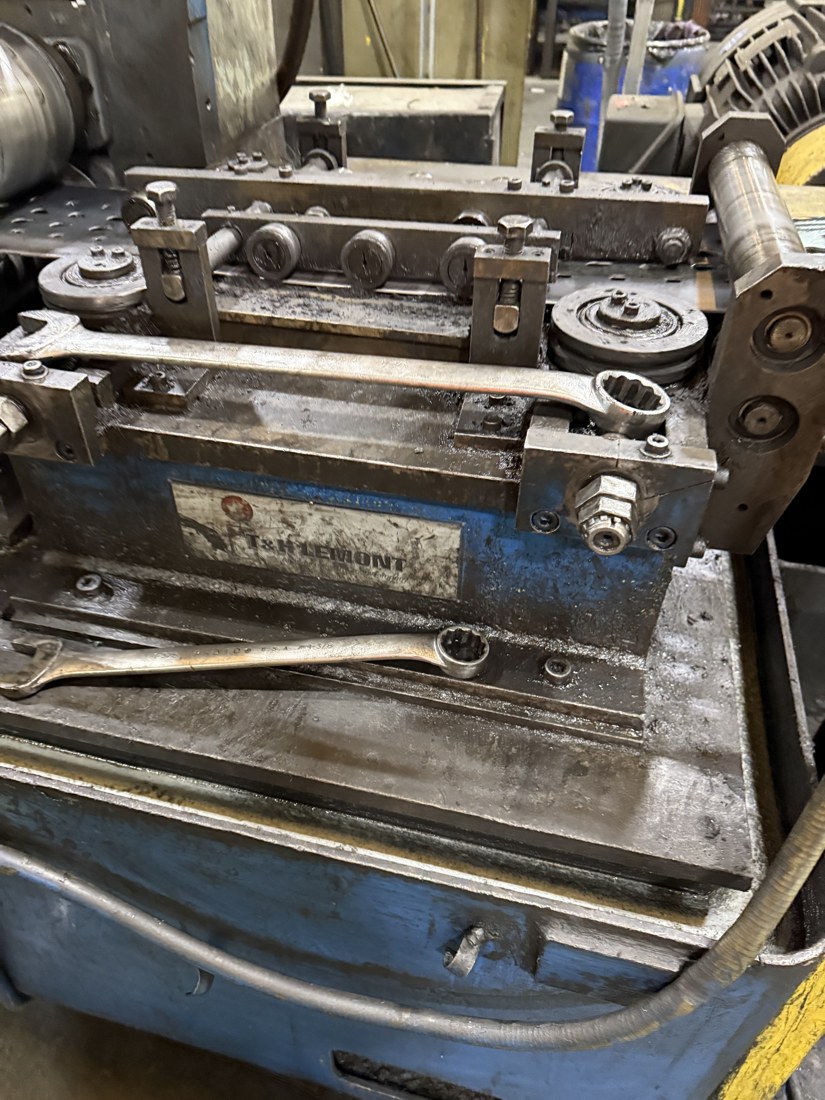
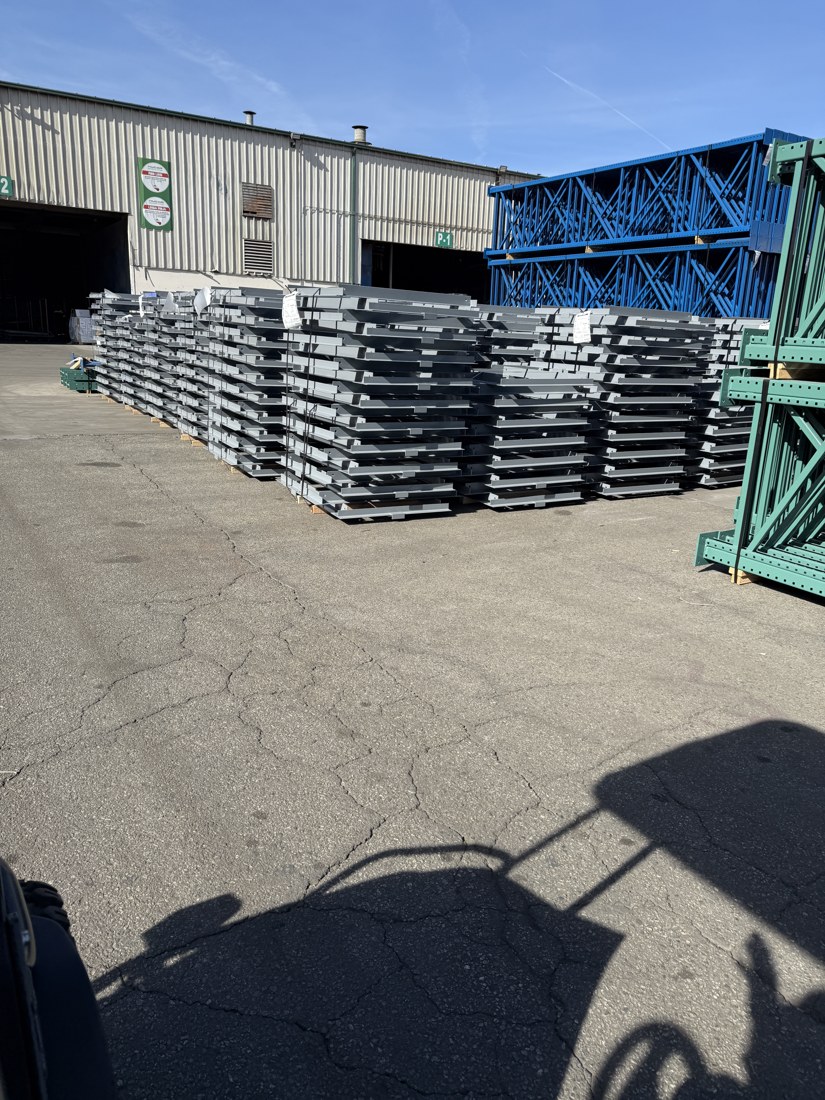
I visited Nucor’s Vernon facility on January 24, 2025. These photos from the tour show the equipment and rack we talk about in the episode.
What operators can take away
- Rack design starts with what the next customer might store, including pallet loads, commodity classification, and fire-suppression requirements.
- An automation plan has to accommodate the date an incoming customer starts paying for occupied space.
- Conveyor hardware and warehouse management software can come from different vendors. Integration affects the start of operations.
- Distance alone can misprice a freight lane. A trucker’s ability to secure a return load matters.
Chapters
Watch 13 clips
How a Steel Coil Becomes Warehouse Racking
Why Some Manufacturers Hand Shipping to a 3PL
Can Your Next Customer Use the Same Warehouse Racks?
When a Local Rack Dealer Earns Its Place
Why Cold Storage Operators Automate the Freezer
What a Palm Tree Can Teach You About Rack Design
How Cold-Storage Operators Pack a Freezer
Why a Conveyor Install Still Needs a Software Plan
When the Customer Arrives Before the Automation Pays Back
Why Small-Bay Industrial Can Stay Tight
When a Warehouse Yard Becomes an Infill Development Site
Where Should a Warehouse Serve Southern California From?
How Wire Guidance Works in a Warehouse Aisle
Full transcript
Justin Smith
Alright, welcome back everybody to another episode of the Industrial Insights podcast. I have Freeman Welch with me from Nucor and known Freeman for a long time. We were just catching up, which is great. And then thankful to have you host me on a tour of the steel plant, which is a two years now, was surprisingly. And that was super fun to be in the hard hats with the gear.
Freeman Welch
Yeah.
Justin Smith
In the field and seeing how it's made from start to finish, which I think few people have seen, and that's your world. So Freeman, thanks for being here and sharing it.
Freeman Welch
Yeah, for sure. It was kinda crazy that was two years ago almost. It felt like it was just like this year that you came through. But times are quick and we're making moves, so it's really good. yeah, I mean from a steel perspective, I would really say that more like availability is gonna be more of the situation for 2027 versus like actual cost. I know you're seeing it, but the price of steel is going up quickly. But with so much going on with Terafab, Data Centers, the CHIPS Act,
Freeman Welch
Nucor's at the for forefront of all of that. So it's a lot of steel going out
Freeman Welch
So you can only make so much steel so fast. And but it's exciting. It's it's it's awesome to be on the forefront of it and see it all happening right in front of you.
Justin Smith
It yeah.
Justin Smith
Yeah, it's such a leading indicator. the Terafab's real. Like it like it's gonna happen. You think they're
Freeman Welch
yeah. It it's really real for sure. That I mean that that you never know with Elon, but from all intents and purposes, that thing's coming through. And I mean our you've been to Vernon, you've been to our plant, th they're they're taking buildings out of Vernon, older buildings, and we're due to have
Freeman Welch
data centers built up in Vernon. And we just had one finish or is close to the finish line and that one took about two years. But they leveled out where the Farmer John plant was
Freeman Welch
It's cheap to do business in Vernon. They got a lot of they got a lot of energy. They got a lot of access to water. So it's it's a good spot to throw some data centers and it's central to LA.
Justin Smith
Yeah. Yeah, that's wild. It's yeah, you might be sitting on a big data center some days over there, who knows.
Freeman Welch
Yeah.
Freeman Welch
Yeah. We're you know, what we're actually seeing a lot of is the hyperscale of a lot of AWS where all of a sudden they're coming to some of my customers or Nucor Direct and saying, Hey, we need to fill this million square foot warehouse just to supply our data centers and and and hold on to the products that we need to keep them moving. So Warehouses are coming in fast and they're filling them up fast because they're just trying to keep up with the demand right now. It's it's really crazy to see.
Justin Smith
Yeah, it's I know racking. like a data centers for industrial folks is an extension that is a bridge too far because there's so much that's different. But then we'll see it with the same people, like a data center people coming in for the same land that like ordinarily might be industrial land. So if you just orient us for a quick moment of like Nucor and steel and if I think of it as like steel that goes into racking is something that like most people are very familiar with.
Freeman Welch
Mm-hmm.
Freeman Welch
Mm-hmm.
Freeman Welch
Yeah.
Freeman Welch
Mm-hmm.
Justin Smith
with and then steel that might go into hyperscalers or into the Terafab or that is related to data centers like what are the segments of that?
Freeman Welch
So it's all f you know, we're Nucor's a closed loop company. So everything that we make is basically domestically made, or it's been it's been made from scrap. So we've melt we've every single piece of steel that comes from our plant and every other Nucor plant gets melted down and gets reused. it at some other in some other point, whether it's making a structural I beam, which you're familiar with, or storage racking as well. So we'll actually do like a cold rolled steel and create it over at one of our steel mills out the most local one is in Fontana. And then what we'll do is and you saw the process is that We'll actually bring the coil in, slit the coil, redirect it, and then roll the coil, punch it, paint it, and create racking. you know, what we're seeing a lot of now is that nothing is small anymore. Call it five, ten years ago, big warehouses were 300,000, 500,000 square feet. Now the norm feels like a million square feet for for big warehouses and
Justin Smith
Yeah.
Freeman Welch
People and and and one thing that I noticed was that when we when we were doing this five, ten years ago, a lot of companies were buying these big warehouses because they wanted to manufacture and they also wanted to ship and they wanted to keep that all under one roof. Now they're finding out that it really makes more sense to do one or the other, which is be straight manufacturing or just be straight shipping. And that's why you're seeing 3PLs and so many of these large commerce-driven companies just take on all that business and honestly they refine that business and make it simpler so it's really advantageous for these customers to just focus on what they're good at and then pay for the space for these other warehouses and then they're not totally connected there you know it's not their property so it makes a lot of sense for them to keep doing that.
Justin Smith
Totally.
Justin Smith
Yeah, and 3PLs continue to grow and it's wild to see like what a big segment they are.
Freeman Welch
Yeah, and and they s and a lot of them start small and get big quickly too. they what's what's unique about the 3PL space for me is that they cover so many products. So as we're building a warehouse for these 3PLs, we have to take into consideration what their product is now and what their product is in the future. Whether the loads that we have now will work for them in the future, whether the c whether the commodity that they have now will be will work for their permitting in the future, for their fire suppression system, for their loads that I that I just mentioned. You know, there's there's a lot that we have to look at early on to be efficient and be in and just make sure that we're doing and providing a value to our customer.
Justin Smith
Yeah. Yeah, that's that's huge. I I was talking with Marc Wulfraat. He does a ton of consulting for large 3PLs and those types of assignments and like a supply chain consulting, both like the network and then like inside the building, inside the envelope. And we're talking a little bit about companies going direct
Freeman Welch
Mm-hmm.
Justin Smith
to manufacturers and to vendors as opposed to going through integrators and when they do that like maybe they are building their own internal teams where they can like service that themselves and that reminds
Freeman Welch
Yeah.
Freeman Welch
Mm-hmm. They are.
Justin Smith
is something you were telling me when we were on the site tour. Is that happening more and more as things get bigger? Or is that how like how would you describe like when that's appropriate and how o much that seems to be something that is growing or it's just kind of maintaining the status quo?
Freeman Welch
That's a pretty loaded question. There's a lot of places I could start there. So from so there's definitely so I manage most of the integrators in Southern California, if not all of them, that are customers of ours and their national reach. So Southern California is unique because you know we're positioned in Southern California, and being that we're a large-scale company, some of these larger companies can come to us and work direct with us. And it's more advantageous for them because there's a lot of the the there's insurance that that for large scale projects that some integrators can't carry there's we have proprietary products that we will try and sell to them that is it makes more sense for them that i also sell to my integrators but sometimes they just want to work direct with us integration and our dealers are still a massive part of our business we believe in them i'm i'm the what what do I always say? I I I fight for them because you know sometimes we do cross paths with d direct and integration, but there's a fit for integration everywhere, especially from the local from the local perspective because
Justin Smith
This is like saying, I hear people do deals without brokers. How cool is that? And then you're like, Well, it's cool at some time there's a time and a place.
Freeman Welch
Ha ha ha.
Freeman Welch
There is a s there is a time and a place, and honestly, the bro you as a broker, you know your segment and you know your jurisdiction and you know that geography. We as a large manufacturer don't know every single place and jurisdiction what they're gonna have to go through and what they're gonna have to work through. And that's why our dealers are so important because they're the ones with boots on the ground. They're the ones that have can provide value to those installs, that they have the experience in those areas and they can answer the questions. Like there's a lot of you're gonna ask me about putting a a warehouse in Manteca. I'm not gonna know anything about it, you know what I mean? But I know the people that work there that I can refer you to that will help you through that process and then sell our product to you, and I will help them work through that process as well. So there's there's definitely a place for both of those kind of businesses. We really try to go for the larger from a direct standpoint, really just like the larger scale, the Walmarts, the Amazons, that they need they do everything direct with people anyways at this point or with companies at this point. So that's you know, that's where we kind of and and sometimes it does make a little bit blurry to the market about where our priorities are. But that's where I come in is I'm I'm supposed to try to skew that a little bit and let them know that like, hey, we do this direct, but you're not in any danger from us as an integrator.
Justin Smith
I could totally see with the the biggest of the players are also working at scale where they already know like their layout or they already know like their quantity or their schedule or their timing or they have like a lot of it like somewhat formulaic where they can I would also see that's why they would be building all these skills in house to the extent they can and that's practical.
Freeman Welch
You know, the industry's grown. There's it kind of flew under the radar for a long time. And you know, we were talking about OGs before our our our conversation, and they were just the the OGs in the business, the ones that you could go to, the ones that you could pinpoint that knew that you trusted, that you could consult with, and that they would guide you through the process. And now, just like as warehousing's grown. There's so many people that have knowledge for it. And there's, you know, people that have worked in integrators and now actually are on the end user side and develop those teams to help them grow, but they still need help. You know, they don't know they can only be as dangerous as they can be because they don't know every single inside and out of it. And that's kind of where our integrators come in and our dealers that help refine what they're doing. And that's, you know, that's very important to make sure that they're looking ahead, they're getting to scale, and that they can actually move forward with the idea that we're gonna grow right now. And this is how we're gonna grow. We're gonna grow exponentially and we're gonna be prepared for that.
Justin Smith
Yeah. it's funny thinking of growth. Like we all had this ramp up after Labor Day, locally and it feels like a generally countrywide of activity on vacancies and just like players in the market making their moves. And of course we're all excited when there's good activity, we're thankful for it, and then we all like think through how long is this going to last, or do you have like you really like pay attention to like, is this ticking up, is it ticking down? And you make the most of what you can when you have it. So d for you, did you see your own version of that too? Or I would imagine a lot of what I have seen and what you see are close to being in sync when we see it based on where we're at in the process.
Freeman Welch
Yeah.
Freeman Welch
Yeah, I know. You're absolutely right. So, I mean, over the last two years with the administration, interest rates, tariffs, you know, it brought a lot of what's gonna happen, you know? And the the tariffs surprisingly were good
Freeman Welch
I'm an, you know, as a domestic steel provider, I'm like bring on the tariffs, you know what I mean?
Freeman Welch
Now it rubbed a lot of people the wrong way, and I understand that. And at the same time, conversely. You know, I'm working on big projects with customers that import in from China. And then all of a sudden, hey Freeman, it's gonna cost me 25% more to do business. So I can't afford to put in this warehouse now. So we're gonna have to drop that down. And I'm sure you probably saw that as well as you're working with these customers to buy big warehouses, and they're like, we gotta tone it back now because we really don't know what's gonna happen with these tariffs and how much more capital is gonna be needed for us to move forward.
Justin Smith
Yeah.
Justin Smith
Yeah. that has been a wild, wild ride. Yeah. it feels like it's stabilizing and it's cool to see the growth, but then to also recognize like it's never broad based.
Freeman Welch
Yeah.
Justin Smith
Or like how broad is it and who is growing and why. And for us so often times it's people have the end of their contract and it's their time to make a move and they have to then make their move regardless of how good they feel about it. So it is interesting to see of everyone who has to make their move now, like who made which bet based on the opportunity.
Freeman Welch
For sure.
Freeman Welch
Yeah. We're actually seeing, you know, the the it's kind of crazy the the industries that we're seeing that are really kind of thriving right now and and moving on is the auto parts industry. specifically Latin America, they're they're doing a lot more down there. brick and mortar, you know, the some of these discount
Justin Smith
Hmm.
Freeman Welch
Companies like the the Burlingtons and the Rosses putting up massive warehouses everywhere. And it it's funny because I mean I look back at it and I would have never thought that five years ago these would be the thriving company. I just didn't see that. But they're abs and you know, companies like Williams Sonoma are doing big things.
Justin Smith
Burlington and Ross would just be killing it. Yeah. Yeah. Not on the cards.
Freeman Welch
Water companies, waters what's it refreshment companies, drink companies are doing a lot right now. It's yeah, and then as we're moving into that, cold storage has been really huge for us too. And you know, from from an automated standpoint and a rack supported standpoint, the the real benefit is that A, you get the return on investment, but B, you know, people don't particularly like working in a minus 14-degree environment so the turnover side of it it's it's be now with the automation and the robotics and the cranes and the way we're building structures it's completely automated all inside and there's just there's an actual conveyor going to another building where everything's getting getting controlled so it's really impressive to see yes is there a lot of capital that needs to get fronted on or used on the front end of course but
Justin Smith
Not so much. Yeah.
Justin Smith
Yeah.
Freeman Welch
It eventually pays off for itself really fast. And the cold storage business is really going through the roof right now.
Justin Smith
Yeah, I don't see it a ton 'cause I feel like we have Vernon and we have a couple areas and then I hear about it a lot and then like Houston or like other markets is where I see a lot of it go. So I'd be curious to learn a little bit more, like, where have you seen some of that or like
Freeman Welch
Yeah.
Freeman Welch
So there's a lot going on near ports. Houston, Savannah, obviously down here, Wilmington, Vernon, kind of just all the way up the seven ten and the one ten.
Justin Smith
Yeah.
Justin Smith
I've seen some of like the pharma related stuff for anything that has to be refrigerated, that's another big segment. Yeah.
Freeman Welch
Yeah, I I'm that's a that's a great mention. we're seeing a huge, huge, obviously with the GLP growth and supplement growth. You know, I haven't gone down that I I I I'm still I'm very streamlined as it is, so I'm not trying to take too much off, but
Justin Smith
You're looking good, Freeman, it works, yeah. Yeah.
Justin Smith
Yes. Yes. That's good.
Freeman Welch
Yeah, it's it's it's crazy. And yeah, to your point, pharmaceutical refrigeration, that it wasn't you know, you saw the Robinson pharma's and and certain companies like that. And now that I'm I'm looking at I'm getting requests for really big pharma warehouses throughout the country. You know, it's
Justin Smith
Yeah.
Freeman Welch
And as you know, it's it's easier to go up than wide and racking. You know, it's it's cheaper to go up. So what we're doing a lot of now is we're seeing warehouses get up to like 50, 60 feet. And we are now pivoting and developing a product that allows us to go that high and then can meet future jurisdictional and permit and code changes so that they can have these buildings for a long time. we have a product called TubeRack that require is is is moment is moment engineering, which means if you think about a rack and the rigidity of a rack. And when you watch a when you look at weather and you see tornadoes, what gets ripped out of the ground are these big trees with these massive roots, right? So what holds up well in wind positions is look they're around us everywhere. Palm trees. So essentially what we've done is instead of welding horizontal and diagonal bracing, we've created a system that allows the columns to act independently and we connect them with cross braces and we're able to get higher loads for customers where they wouldn't. We're able to reduce [unclear] footplates where they wouldn't. We are able to use smaller slabs you know in older buildings that maybe necessarily wouldn't be able to support what is needed and
Justin Smith
Hmm.
Freeman Welch
It's you know that the product is it it's a little bit more, but it pays off immediately. And once you get used to it and it's called TubeRack, you can't go back because it's modular, it it works in other jurisdictions. After you know, I mean you know this, like code in in one city may be different a hundred feet away from the other city, but we found the flexibility with this product to work in in pretty much everywhere around Southern California. So it's been really good for us and really
Justin Smith
Yeah.
Freeman Welch
Yeah.
Justin Smith
Yeah. W like we'll see the new class A be like forty two foot and I've always heard of like the fifty and sixty and then outside of like the Amazon mothership buildings, like you rarely see it, but that height there is for mezzanine, not necessarily like purely for storage. And I would think that like a warehouse automation being more prevalent would change your world a little bit too, but maybe that's the height is right there with that conversation.
Freeman Welch
Yeah, for sure.
Freeman Welch
Yeah, it's you know, we have to work very closely with our forklift partners as well as they're developing their technology to reach those heights.
Freeman Welch
You know, with with cold stores specifically, you want to slam as much stuff as you can into a warehouse because just like your own freezer, if you got more stuff in your freezer, it keeps everything colder and you don't have to pay spend as much for energy bills. And that can add up really fast. So we're just, you know, we're trying to stuff as much as we can and go up as high as we can. And a lot of that is like our high density storage, which is our pallet flow, which is our pushback, and Yeah, it's it's it's really changing the marketplace for sure.
Justin Smith
Yeah.
Justin Smith
Yeah. Have you had any like projects stop? Or like I would imagine in the last two years with like all of the different changes you've had stuff where it's like whoa whoa whoa whoa hold up or I need to change it. Like you see much of that and how do you deal with it?
Freeman Welch
So there's like there's there's like almost two parts of that. Yeah. So I've had, you know, there's there's different seismic code changes, specifically in colo California, over the last year or two that have as buildings are going taller and rackings going taller that we've had to account for, you know, the
Justin Smith
The go part is much more fun than the stop part, but I figure that's good to learn about too.
Freeman Welch
the wind loads, even though it's inside a warehouse, just whatever shakes it this way versus this way. I'm even you know there is times where I'm going through permit there permit situations in twenty twenty five. And they're actually within the system, and then we get to 2026, and they come back and say, okay, this 2025 stuff, even though it's in our system right now, isn't gonna fly. So then we're having to work with engineers,
Freeman Welch
So, you know, I've also seen customers spend millions and millions and millions of dollars on automation, conveyance, and then they just had to stop because they ran out of money or, you know, a different factors. And then all of a sudden they've got these warehouses that have millions and millions of half-installed.
Justin Smith
That's insane.
Freeman Welch
automation that now it it's an aud you know automation is fully custom. You know there you don't just look in a catalog and say, Okay, I'm gonna buy that and install it right here. It it doesn't work like that. And I wish it did. Yeah, you could put some tails with some or some tables with some rollers on it and put those anywhere you want, but it just doesn't work like that. You know, we use 3D modeling in order to run
Freeman Welch
Conveyance through our structure, you know. We provide we have to work with these different automation companies very closely and their designers in order to provide the infrastructure of holding the conveyors. We have to develop certain kinds of arms to hold it the proper way. So, you know, it's really a long, a long process, and then you get to that point and you install it and then you're also having to get your warehouse management system to work too. And sometimes the left hand doesn't talk to the right hand. And that's where I actually see some challenges as the automation growth side because the automation companies, the ones that actually make the product, don't necessarily have the warehouse management system part of it down. So then there's other companies that do the warehouse management systems and they don't always just integrate seamlessly per se. So it's once you get to the point, the ROA ROI is right there, but it's a long process for sure.
Justin Smith
Yeah. And you said the magic word which wasn't AI, it was ROI. So people are looking for shorter, sooner, faster, two, three years or something like that. And then I've also had other people. It was another mark thought that he was sharing that was people have to start becoming more comfortable with like a longer ROI.
Freeman Welch
Yeah.
Justin Smith
And recognizing like the length of this type of investment and it being like a piece of infrastructure almost and almost thinking like ten and fifteen years and a lot of his was automation talk perhaps as opposed to just like store steel. So where's that in your conversations with people?
Freeman Welch
Mm-hmm.
Freeman Welch
Mm-hmm.
Freeman Welch
There's a lot of pre-qualifying involved with that. yeah. Because you have a lot of customers that like shiny things, you know what I mean? And they you
Justin Smith
That was a big sigh.
Justin Smith
Yes. totally. The arm, the new thing, yeah.
Freeman Welch
Yes, yes. And yeah. And they've got people telling them or they've got their international sort of bosses telling them that, yeah, you need to go find out this. This is gonna be this is gonna be the thing and that's and then they start finding out all the different nuances of it and everything that's gonna be required to get to that point and all of a sudden it doesn't always seem like a A benefit because to your point, the ROI is that far ahead. And then they decide, well, we have so-and-so customer coming in who's gonna be storing all their products with us, and we need to have something up in three months, otherwise, we start losing money because we can't charge people for space. So then it becomes, okay, how quickly can we get this racking up and let's pump the brakes on the on the automation and Let's just get somebody in there and then let's try to see what actually works and if we actually need the automation. And then there's other people that are already working with automation integrators, the Symbotics out there who work with the Dematics that work with these larger scale companies that connect us with them. And sometimes they're the ones that are actually pre-qualifying and coming to us and saying this is what they want.
Justin Smith
Yeah.
Freeman Welch
They're gonna do a hundred thousand pallet positions with a pallet shuttle that's gonna, you know, and they're gonna have to spend fifty million dollars on it. And then that's where we start coming in and working with them and developing the infrastructure for it. it's not common where Company A calls up Nucor and says, Hey, we're thinking about this this this new conveyor system. Can you guys tell us about it? You know, that's it's it's usually more it it's more coming from the integrators and connecting us with them. If that makes sense.
Justin Smith
Yeah, yeah.
Justin Smith
Yeah. Yeah. Well it's gosh, when you think of like who's involved and what their knowledge level is and what size the projects is gonna be and it is funny to see who gets connected with who and that kinda changes the order of who's having which conversation and like how well they're doing with that.
Freeman Welch
There's some smart people out there. Some really smart people out there.
Justin Smith
It and it's cool stuff. I f I feel like industrial engineering is like pretty hot right now for people that like a delve right into that and are trying to ride the technological wave and then figure out like how do you bring it to market.
Freeman Welch
Yeah, it's
Freeman Welch
Yeah, we weren't the most glamorous industry five years ago. But as man, as robotics and automation are becoming more prevalent in our business, people are like, ooh, that's cool. You got the robots over there moving boxes. But here's the funny thing about that, you know, and my and this is my opinion, everybody's so concerned about. automation and robotics taking people's jobs. If you go in a warehouse in a for instance an Amazon warehouse, nobody's touching your stuff. You're, you know, it gets brought in, it gets put away, and then they've got bots picking them, they've got bots putting them on conveyors, and then they have conveyors that are actually wrapping the boxes around the products and then taping them and they're just out. Not one human has touched any of that. And it it's That's why I find it funny, or when you see they show like the humanoids like doing the work and I'm moving from one thing to the other, that's not gonna I I personally don't think it's gonna be that common. I think it's gonna that's really flashy and really cool looking, and maybe we'll find other uses for humanoids, but Really, it's it's already it's already done. It's already happening. You know, there's a lot less people running around in warehouse, especially with AGVs and automated you know automated forklifts and wire guidance. It's it it takes the human human error out of it, which is nice. And you know, I I hate to say it, but it it makes it a safer working environment for everybody. And
Justin Smith
Yeah. I'm sure you're a good driver on the roads, Freeman. Yeah.
Freeman Welch
It's kinda the thing about forklifts is that it's if you've ever towed, you gotta kinda do it the other way. You know, when you're backing in, you gotta turn it this way versus doing it this way. And I I've stayed away from it. You know, I don't wanna be Michael Scott in the office and knock a bunch of stuff over, but you know, it's it's it's interesting for sure.
Justin Smith
yeah.
Justin Smith
Yeah.
Justin Smith
Yeah. We're at a moment to see how things change and then how it frees people up to do new cool stuff and what is that new cool stuff gonna be.
Freeman Welch
Yeah, it it we're at an interesting time for sure right now.
Justin Smith
Yeah. and then you guys opened up a new plant in Georgia, if I'm not mistaken. What's that all about? I was I was gonna ask like what areas of the country are hot, 'cause over there there's a lot of stuff heating up or like they're riding the wave a little different where we perhaps had
Freeman Welch
So we yeah, so we have a
Justin Smith
at least in warehouse like a values and pricing. Like we all came off the peak. We went down into the trough thirty percent or so and now we're coming back up. And it's funny to see a lot of markets where there wasn't as much supply or they weren't as like port driven and have them not have a trough. They had more like a pause maybe and then like a continue to go up, which that's pricing and the
Freeman Welch
Mm-hmm. Mm-hmm.
Justin Smith
journey that we all took where a lot of those markets still like other ones are starting to rebound faster in terms of absorption. So I was curious if Georgia is because that area has a lot of activity or that's just a place where you could land a big steel plant that's not easy to land.
Freeman Welch
So when before we were purchased by Nucor, we were Hannibal Industries. And our first plant that you've been to was in the heart of LA, 22-acre facility in Vernon. We were a tubing plant and then went went from tubing and developed into racking. As we grew, we brought on the Amazon account. So Back in 2016, I believe, we opened up a plant in Houston that was basically gonna be the Amazon plant because Amazon was growing so fast. Nucor purchased us in August of 2021. And later in 2022, they purchased another racking company out of the southeast known as Elite Storage. And with that, we became Nucor Warehouse Systems. So we have FOB points in Vernon, Houston, and just outside Atlanta. Now, with Nucor being an East Coast company based out of Charlotte, it you know it's naturally kind of moved a lot of the the office side of things. Over to Georgia. And then with that being said, we have a new plant in Georgia that's 80% automated that will be able to produce more racking for us in that area. There's a lot of areas in Tennessee, Arkansas, Georgia, those places that have still like a lot of land and a lot of development, and little cities that you know. Walmart specifically likes to go build their DCs in small cities because they want to support that kind of market. Amazon's a little different. They go to kind of like the bigger cities and then have little satellite, other little what do they call the
Justin Smith
Yeah.
Justin Smith
Last miles.
Freeman Welch
Exactly. The last miles. And they and they work with those a lot. So Walmart's really grown a lot over the last couple years, if you can believe it or not. and has grown their their online presence like you know Amazon did, which everybody also had to keep up with it. you know when when COVID hit, it was a really good time for us because warehousing grew, not just because Everybody wanted to do everything online, but you know if you remember there was 300 tanker ships off the side of off the coast of California. And when all those tanker ships had or container ships had all that product in it, those companies aren't making any money. That's just sitting out there and they're not selling it, which is why.
Justin Smith
Yeah.
Freeman Welch
They decided that okay, I'm gonna build a big warehouse and make sure I stock it with plenty of toilet paper and plenty of tick paper towel so that so this doesn't happen again. So it definitely drove the industry at a time where also steel was at its most expensive, too. So though those were some really good years for us. And then as interest rates started going up and development kind of stagnated, it drove the price of steel down.
Justin Smith
We're never doing that again. Yeah.
Freeman Welch
And now with so much going back with with now with so much going on again and availability, not price, being the real crutch of next year, now we're seeing it go back up again. So some people view steel as a commodity, some people view racking as a commodity. We obviously don't. And I think now people are our customers are now seeing that it really just it's only a commodity when it's cheap. As it goes expensive, it get it becomes a little bit different.
Justin Smith
Yeah.
Justin Smith
What's the price of steel today?
Freeman Welch
I believe it is about a thousand, somewhere between eleven hundred and a thousand a ton right now. and early in the beginning of this year, it was close to like eight hundred a ton. So there's been, you know, a massive a a massive uptick and a massive rise in costs. And you know, what we were running into a lot too was just it was hard to hire people.
Justin Smith
Okay.
Justin Smith
Yeah.
Freeman Welch
It's we the as it was growing and people weren't working as much, finding skilled labor and welders and and and engineers and project managers, they they're just they weren't as much around and now we're finally getting back to that point where we're able to run two shifts to meet the demand. yeah, it was
Justin Smith
Yes.
Freeman Welch
Last couple years have been I I I j I'm sure it hasn't been easy for you and it hasn't been easy over here on the steel side of things.
Justin Smith
Yeah, you make it happen but it's it doesn't happen on its own. So if we were predicting price of steel next year on next year's episode, would you go with under or over thirteen hundred?
Freeman Welch
You just gotta grind harder.
Freeman Welch
I think that's that's likely. I I didn't mention it, but the military uses a ton of steel. Our sixteen gauge steel that we use for the beam side of our business, that's what they wrap bombs with and missiles with is sixteen gauge steel. So it's
Justin Smith
Yep. Demand. That's another demand that is next to data centers that is influencing the price.
Freeman Welch
Mm-hmm. Yeah. automotive was driving up the price a a couple years ago as well. But yeah, the the availability will be interesting. And obviously because we're Nucor, we're part of the Nucor brand. we're gonna be having access and we're least likely from a warehouse system side to have that availability problem. But I cannot speak for other manufacturers and other steel companies out there if that's gonna be the case for if that that's gonna be the case for them as well.
Justin Smith
Yeah, I could only imagine all the AI data center talk and then the elections and then like people trying to prognosticate how long is that gonna go or all the things that are like in process or in permitting, will they actually go vertical? And it sure seems like that's a difficult to prognosticate, no doubt.
Freeman Welch
Mm-hmm.
Freeman Welch
Yeah, I mean we've been doing AWS for a long time. that's their most profitable side of their business, is the AWS side. And what they were doing initially in the last five, six, seven years was they just had unmarked warehouses all over the country that just had server racks within them. And it, you know, AWS is ever NBA powered by AWS, NFL powered by AWS. So that was kind of a low profile. side of it. I mean now we're doing custom cabinets for PayPal, Google, Meta,
Freeman Welch
But I'm a warehouse systems guy. So, you know, I I I just get this I just get the
Freeman Welch
I d I just get the memos about everything. I don't I'm not actually on the the forefront of it, but I do help with some of the like I do see some of the designs and and how flexible they have to be because servers change in different sides. It's you know the it's also taking up our our production capabilities too. We don't just have we couldn't can't you can't build production fast enough to meet the demand. So, you know, from a warehouse system side, we kind of had to slide a little bit to the left while the Nucor focused here. But you know, we've I think we're in a good spot now where we kind of can do both and we've learned and there was some growing pains over the last couple of years for sure.
Justin Smith
Totally.
Freeman Welch
Not everything was a smooth transition, but we're really hopeful and really positive about the direction for 2027. So that's exciting for us.
Justin Smith
Hell yeah. We gotta keep it going, keep growing.
Freeman Welch
Yeah, man. What are you guys seeing on the on the industrial side right now? you know, what what are you were you seeing are you seeing a drive in in in smaller warehouses, more manufacturing, or is it are you guys really seeing more of like a storage side of it?
Justin Smith
Yeah, the small bay or anything I used to think like there's shallow bay that could be like twenty five hundred feet. Maybe small bay is now a term for something that's like fifty thousand and under. Like that stays tight almost no matter what. And it will oscillate, but like with the lack of new supply in that size range, that is just like its own version of infill almost that it never gets too loose or it doesn’t, like, hit the trough too hard. So that's remained kind of like our stable no matter what.
Freeman Welch
Mm-hmm.
Justin Smith
Is like a pretty consistent and then just the further you go out from infill markets and the bigger boxes and the new construction that's what swings wildly. That's like a class A office has the biggest peak to trough. I feel like a class A new construction has the biggest peak to trough and especially on like the frontier of any market. So it's interesting.
Freeman Welch
Are you seeing developers come in and actually wipe out some of these smaller warehouses and then build up bigger ones in areas? Or are you seeing more people just go to like a green field hasn't been developed and just building up larger spots out there?
Justin Smith
Yeah. the first one people buying like a smaller buildings to build bigger for sure, but it's all predicated on that small building not utilizing the majority of the land. So those are all like underutilized in the sense that the floor area coverage ratio is super low. So if you have a big parking lot or outdoor storage or something like that and you can turn a yard into a building, that’s definitely the norm.
Freeman Welch
Mm-hmm.
Freeman Welch
Interesting. Yeah. Mm-hmm.
Justin Smith
It's cool to see because it gives you new product inside close to the city. And then for Greenfield, we don't see it, but I think that's only because we know here if you build it, they will come. So I feel like it's more just like, do you feel good building in this environment? And the answer is almost always yes, because population's growing, 3PL is growing, the port is growing, and it's just a matter of time, I suppose, so long as you build what is the most modern with the
Freeman Welch
Yeah.
Justin Smith
most, like, functional features. So that's definitely different than when you think of some of the places in the south or the southeast where you do build a suit on a big piece of dirt that's green field that's probably moving something from here over there. So we don't see that as much as it's would be cool to partake in like developing something ground up here, all of that is primarily on spec, like ninety five percent on spec.
Freeman Welch
Me. Yeah.
Freeman Welch
For sure. You know, you mentioned you mentioned that the development in like Houston and how much has changed in Georgia are how what do you see from like a a leasing standpoint perspective, like a premium in cost at all? For for you know, are are they is California still a premium compared to these places? Or are you seeing, you know, the what do they call it, triple N in your industry? You know
Justin Smith
Yeah. Yeah, triple nets, yeah. Property tax insurance and maintenance. we have work going on from up to Seattle, out to Phoenix, over to Dallas, in Tampa right now and probably in ten different states and
Freeman Welch
Mm-hmm.
Justin Smith
they're all different, generally always cheaper than Southern California to most like in most practical circumstances. But I think the answer to your question almost is like it's less of could you be in Florida instead of California. It's if you are gonna serve Southern California, should you do that from
Freeman Welch
Mm-hmm. Mm-hmm.
Freeman Welch
Mm-hmm.
Freeman Welch
Yeah. Yeah.
Justin Smith
LA in the South Bay? Should you do it from Ontario? Should you do it from Vegas? Should you do it from Phoenix? And then how do those all connect? And we just finished a 350,000 foot renewal. Yeah, in the West Valley in Arizona. So
Freeman Welch
Yeah. Yeah.
Freeman Welch
Nice. Nice.
Freeman Welch
Yeah, I was just out there. Actually, it's that place is booming. I just did a a big project for Puma out there, actually. Yeah, they're they're yeah, and there's there's some hyperscale going out a lot a lot out there as well. And I mean frankly a lot of companies are moving their business to Arizona for all the advantages of it.
Justin Smith
Puma's Puma's a big one, yeah.
Freeman Welch
It's still close. It's cheaper. There's a lot of land. they welcome development out there. So I and it's still close to California. You can still fly there in in 45 minutes, you know what I mean? Like I do morning trips and then come back in the afternoon pretty con pretty consistently. It's easy to do. So it makes it very advantageous.
Justin Smith
It's the best. So if you think of that deal I did that is probably three miles south of the Puma building. So same exact submarket. So let's say the guys I worked for, the guys you worked for are trying to figure out should they be there or should they be in Southern California. near the ports they would pay two and a half times more for their building. in Orange County they would pay two times more.
Freeman Welch
cool. Yeah.
Justin Smith
In Ontario they would pay like a hundred and thirty percent more, but in San Bernardino they would almost pay the same. So if that were true, then that doesn't necessarily mean labor gets cheaper if you come back here, but how much you spend in trucking.
Freeman Welch
Yeah.
Justin Smith
I think to get product to there and to get it back from there in your shipments of your product to your customers, whether it's retail or like to consumer, I think that's the math that people are starting to think through, like, okay, if it's at parity and labor is a little less, but trucking and transportation can go down by half or by something like that, what's that worth? And then d what does that then mean?
Freeman Welch
Yeah.
Justin Smith
Is that compelling enough to move h back here? Or is it like most people you know you grew up with? Once they leave they don't come back just because like you rarely come back to a place that's like a high cost of living. Usually like once you've made the move, then you are like working with different variables and like it doesn't you don't go back in time. So it's that's interesting to think through, like, okay, now what when there is new growth, it's not necessarily moving something back. It might mean you're gonna keep that and now when you put your next one down.
Freeman Welch
Mm-hmm.
Justin Smith
Are you gonna put it down over there? Or at this moment would you now put it down here based on that and then rejigger your network? I think that's the calculus that's interesting to see like how does that then play out.
Freeman Welch
Yeah. Mm-hmm.
Freeman Welch
And it's it's interesting you say that is because I don't think everybody, you know, if you were planning on building two years ago out in these areas, expected that gas or diesel would be as high as it is right now. And you know, some it's crazy to think, but some of these these lanes, these trucking lanes that are go you still have to go six or seven hours.
Justin Smith
Yeah.
Freeman Welch
May just be the same price as having to go three hours in a different direction because it's traveled so much, they can pick up stuff on the way, they can bring stuff back, and that's not always possible in every direction that you're going. So then you're having to take that in consider into consideration as well. Is this lane gonna be more expensive than this lane? And that's why San Bernardino to Arizona works so well to your point, is because that's a heavily traveled lane. And then we're seeing a lot of development up to 15.
Justin Smith
Yeah.
Freeman Welch
way up into Utah connecting Idaho and then also up the 99 up through central California where all the farms are a lot of development out there because there's just it's there's straight shots and it's good for trucking. So yeah it's it's it's a wild wild world out there for sure. It's a wild we like to call it the wild west but they can't call the wild west over on the east coast but it's wild everywhere.
Justin Smith
Yeah.
Justin Smith
Yeah.
Justin Smith
Yeah, that's the last like a place that I started to get real smart was on the lanes and learning that more. And so I feel like for someone in our space that's adjacent, but like it's a great thing to get smart on and to like recognize the patterns more and to like stay up to date with. Well, I'd say let's wrap it up, Freeman. That was super good. I appreciate you spending the time and
Freeman Welch
Yeah. Yeah.
Freeman Welch
Yeah. Thank you. No, that was great. I like I said, I was I was a little nervous, but no, that was super organic and everything was just I the conversation was great. I really appreciate you having having me on here and being able to talk about my business and related with your business and where the future of warehousing is really going right now.
Justin Smith
Half the fun. Yeah. Cool. Well catch you later. I appreciate ya. Yep, see ya.
Freeman Welch
Yeah, man. Yeah, man, appreciate you. Have a good one. See ya.