Industrial Insights · Full episode
AI, Industrial Leases and What’s Actually Negotiable
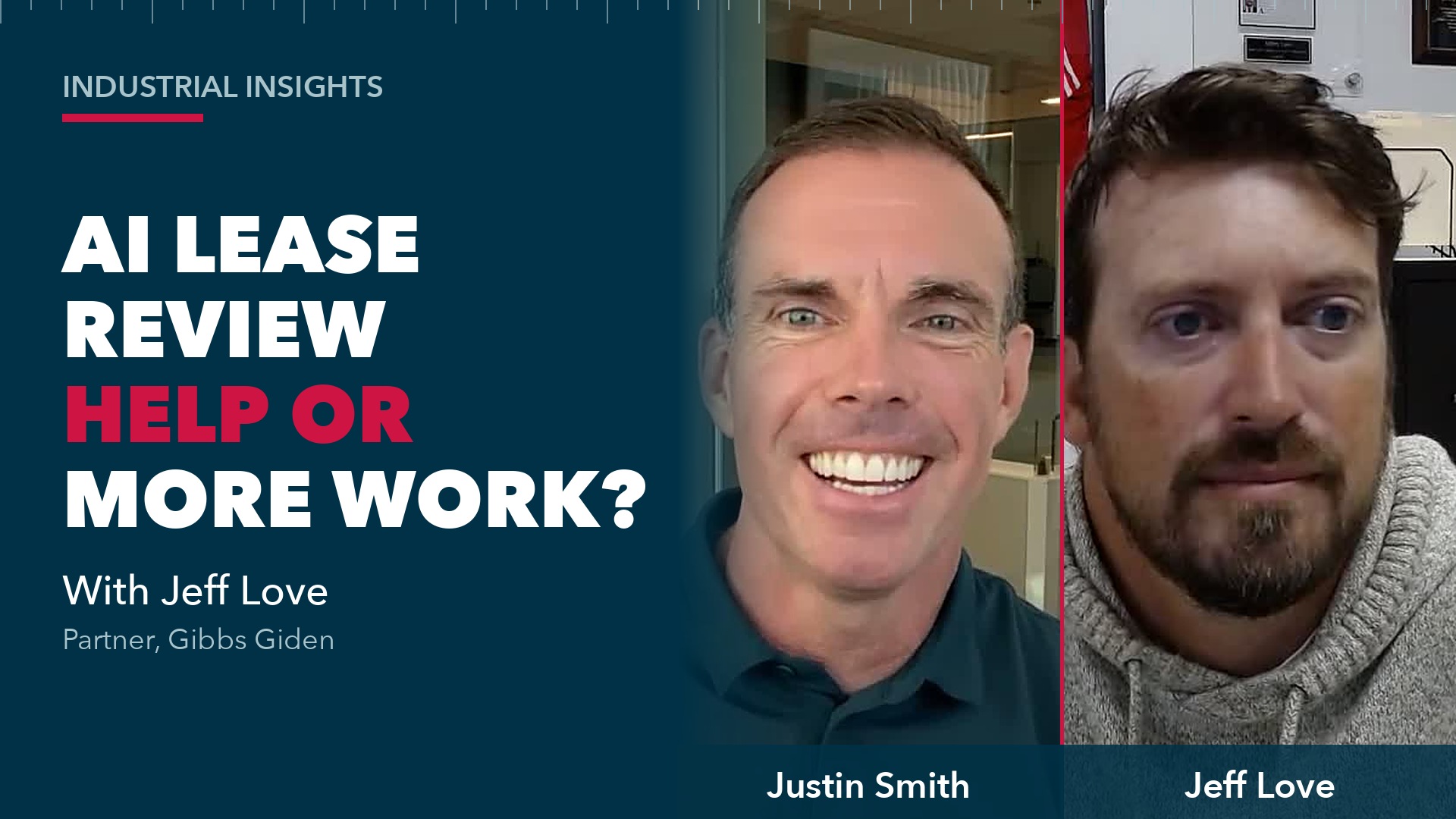
Clients are running leases through AI before they call their attorney. They’re finding issues and asking more questions. Are they getting better deals?
I’ve worked with Jeff Love for a long time. He’s one of the people I call when a lease or purchase agreement gets difficult. I wanted to hear what he’s seeing now that clients can generate a long list of contract comments in a few minutes.
Jeff sees useful applications for AI, including research, another pass through a document and organizing lease obligations. He also sees clients spend more time and money working through suggestions that don’t fit their deal. We talked about how to tell the difference, then worked through the lease decisions where judgment and negotiation matter most.
Watch the conversation
Watch on YouTube · 47 minutes
Listen to the episode
Episode chapters
- 00:00 Meet Jeff Love
- 00:50 From aspiring developer to real estate attorney
- 03:25 Manufacturers becoming property investors
- 05:38 Economics shaping real estate transactions
- 08:47 Development and construction contracts
- 10:05 Pricing, change orders and termination rights
- 13:50 Who controls tenant improvements?
- 16:27 What is actually negotiable?
- 18:04 AI in lease review
- 21:48 Market terms and negotiation leverage
- 25:25 What landlords will change
- 27:33 AI for lease obligations and deadlines
- 28:54 Industrial maintenance and repair obligations
- 33:47 Renewals and option rights
- 39:13 Environmental exposure
- 42:58 Defaults, settlements and business judgment
Download the edited English captions
More comments can mean more work
An AI review can flag a lot of risk. The next question is which of those risks matters to your business, what the other side might agree to change and what you’re prepared to give in return.
Jeff describes the extra work that comes when clients bring in a long list of proposed revisions. An attorney still has to review those comments, explain which ones apply and work through the effect on the rest of the agreement. The list can be useful, but someone needs to set the priorities.
For a tenant, that might mean focusing on a guarantee, cash exposure, repair obligations or indemnities. Jeff’s point is practical: understand the lease and choose the issues that deserve the most attention.
What does “market” actually mean?
We use “market” to talk about rent. Attorneys use it when they talk about lease language, rights and responsibilities.
Jeff admits he used to dislike the term because each transaction is different. He still believes there’s room to negotiate. But if a request is far outside what the other side will entertain, you need to recognize that and decide where to spend your effort. That’s a useful conversation for a broker, attorney and client to have together.
Who controls the tenant improvements?
It’s easy to focus on the size of a tenant improvement allowance. We spent time on the decisions around it: who hires the contractor, who directs the work, when the money arrives and who carries the risk if the project falls behind.
A client may initially want the landlord to handle everything. Once they understand the tradeoffs, they may prefer to control the work themselves. That can create another question: can they fund construction while waiting for reimbursement? The control and funding decisions need to work together.
Who does the work, and who pays?
Those can be two different parties. We talked about how a lease allocates repair work, reimbursement and capital expenditures, and why the mechanics deserve attention before something breaks.
Jeff explains that timing within the lease and the reason a repair is required can affect the analysis. Roofs, HVAC systems and other major items deserve a clear conversation about the actual agreement. A short statement that something is the landlord’s or tenant’s responsibility may leave out the part that matters most.
A renewal can be a chance to improve the lease
Renewal discussions often start with rent. They can also be an opportunity to revisit repair obligations, address problems that showed up during the term or update the permitted use as the business changes.
Jeff distinguishes the protection an option can provide from the opportunity to negotiate a renewal. An option may preserve a tenant’s right to stay if a building changes hands. A negotiated extension can give the parties room to address terms that no longer fit. The available choices depend on the lease and the situation.
A practical use for AI after the lease is signed
One of my favorite parts of the conversation was the shift from reviewing risk to keeping track of obligations.
AI can help organize rent dates, notice requirements and option deadlines into a summary or calendar. Jeff’s reminder is to check the output against the agreement. The value comes from making the obligations easier to manage and keeping someone responsible for the details.
Also in the conversation
- Why Jeff originally wanted to become a developer and found his place in real estate law.
- How manufacturers and business owners can become industrial property owners and investors.
- Construction pricing, change orders and the cost of ending a contractor relationship.
- Why a standard lease still needs advice specific to the client.
Construction-contract context: California CSLB’s fixed-price guidance discussed in this episode applies to disaster-related home improvement work. Requirements depend on the project and contract. Read the CSLB guidance.
About Jeff Love
Jeffrey B. Love is a Partner at Gibbs Giden in Los Angeles. His practice includes commercial real estate transactions and office, retail and industrial leases for landlords and tenants throughout the West Coast. He also advises businesses on corporate transactions and serves as outside general counsel.
Jeff’s biography at Gibbs Giden
Related reading
- Claude for Legal by Ruben Hassid - the article that helped frame the interview preparation.
- Industrial Lease Guide
- Renew or Relocate articles
This conversation reflects the speakers’ experience and general observations. A specific lease or transaction needs review of its own facts and terms.
Working through an industrial lease?
Start with what your business needs from the property, then work through the economics and responsibilities with your broker and attorney.
Talk with Justin about your next facility decision